
5 Simple Tips To Get A Stress Free Divorce With Affordable Legal Advice
Free Divorce Consultation With Divorce Lawyers With Over 20 Years Of Combined Experience
As Seen On





3 Basic Requirements Before Getting A Divorce In Singapore
You’ve been married for at least 3 years.
Either you or your spouse is a Singapore citizen or has been living in Singapore for 3 continuous years immediately before filing for divorce.
You have have proof that your marriage has irretrievably broken down (i.e., adultery, unreasonable behaviour, desertion, or separation for three years with consent or four years without, mutual agreement).
Before initiating the Divorce process, it’s vital to fulfil specific legal requirements.
We understand how this can seem overwhelming, but that’s where our legal expertise comes into the picture to help you.
Whether it's verifying your eligibility for Divorce, evaluating your financial rights or parental obligations in a Divorce, or advising you on the appropriate strategy to adopt, we shoulder the legal complexities so you can focus on preparing for your next chapter and life after Divorce.
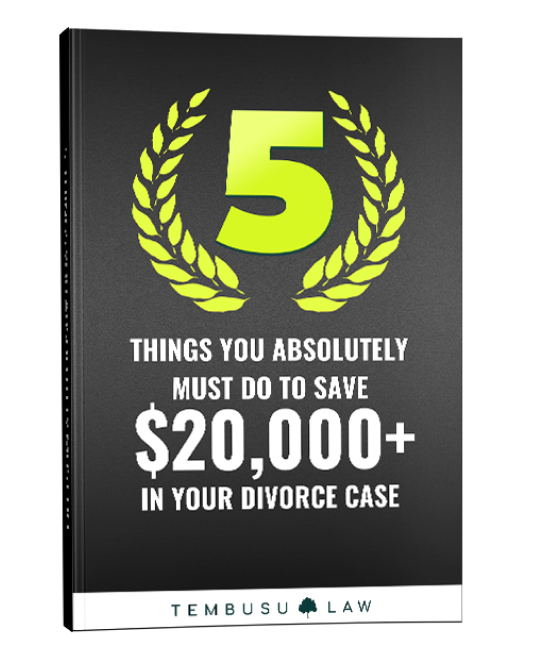
Free Checklist Reveals: 5 Must-Have Tips To Save $20,000 In Divorce Legal Fees
How to get your proposal right from the start - knowing what you can realistically aim for and what’s impossible to get
How to successfully negotiate and compromise and still reach a win-win outcome
How to identify and navigate around potential post-Divorce problem areas
Fill up the form below to download your free checklist ⤵
Why Tembusu Law For Your Divorce Case?
Empathetic To Your Situation
We understand the emotional toll of a divorce. Our team approaches your case with empathy, hearing out your concerns and addressing them with genuine care.
Assessing All Possible Options
Every case is unique. Our Divorce lawyers evaluate all available avenues and approaches to equip you with the best strategies tailored to your unique situation.
Professional Expertise In Divorce And Family Law
With decades of experience, our lawyers anchor Tembusu Law’s strong foundation in Divorce and Family Law. Their extensive knowledge assures each client receive precise and informed guidance.
Swift Response
Time is invaluable, especially in Divorce matters. We prioritise promptness through timely responses and actions because we understand every moment counts.
Save Thousands In Divorce Fees
Tembusu Law champions cost-effective solutions. Not only do we aim to save you thousands in divorce fees, but we also offer flexible payment plans, catering to your financial situation.
Service You Can Trust
With years of experience and a legacy of satisfied clients, Tembusu Law has cemented its reputation as a trusted legal partner, consistently delivering results and exceeding expectations.
Hear From Our Clients


We Ensure Your Rights
There's more to Divorce than just ending your marriage. Child custody, spousal and child maintenance, division of your matrimonial home and other matrimonial assets all play a critical part. Through the lens of your unique situation, our lawyers will customise a plan and guide you in making the right decisions for you and your loved ones.

Child Custody, Care and Control, and Access:
We'll advocate for an arrangement that serves the best interests of your children, balancing their needs with your wishes. This involves determining who makes significant life decisions for the children (Custody), who the children live with and who manages their daily routines (Care and Control), and how the children’s parenting and contact time with your spouse will be arranged (Access).

Spousal and Child Maintenance:
Financial matters are always a sensitive topic. We'll work towards a fair and equitable arrangement, ensuring financial sustainability for all parties, particularly in providing for your children’s education and general welfare.
Division Of Matrimonial Home And Assets:
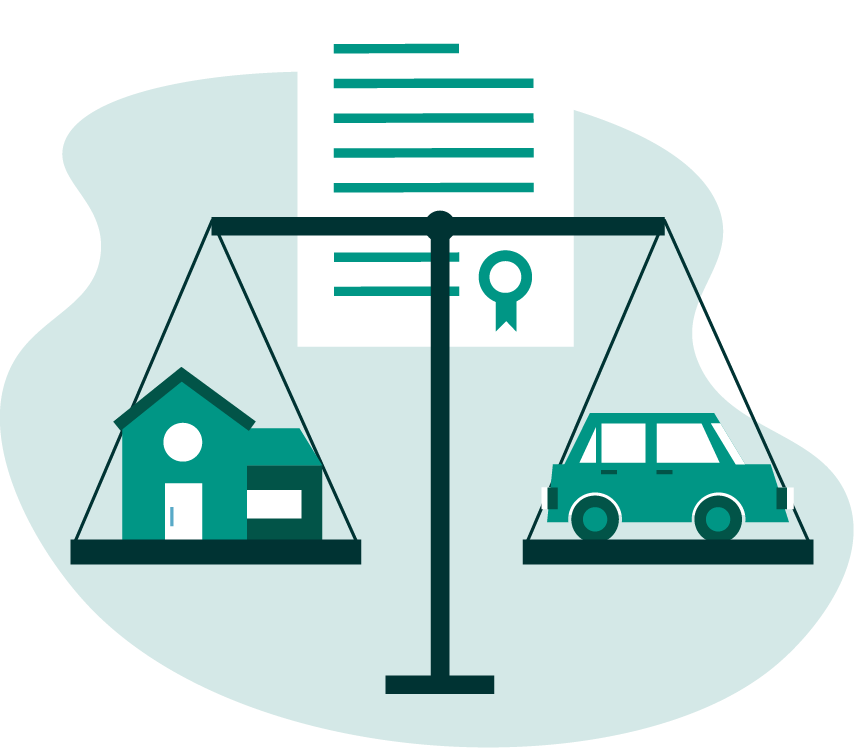
We'll help you negotiate a just and equitable division of matrimonial assets, helping you transition into your new lives to alleviate anywithout unnecessary financial strain. Matrimonial assets typically include your HDB flat and any other assets acquired during the marriage, but will also encompass property that is solely or jointly owned.
Meet Your Divorce Lawyers
Lean on our seasoned Divorce and family lawyers at Tembusu Law, who combine expertise and empathy to guide you.

Jonathan Wong
Managing Director



Uncomplicated, Amicable, And Affordable
Navigating a Divorce is a critical junction in your life, but the path forward doesn't have to be complicated or financially burdensome.
With our expertise, you can envision a peaceful resolution where you can finalise your Divorce in the shortest time possible, without expensive courtroom battles. We want you to picture an amicable parting, where both parties agree on the terms, keeping conflict to a minimum.
Consider the possibility of a financially fairDivorce that preserves your financial independence and prepares you for the next phase of your life. These scenarios aren't just a product of wishful thinking — with us, these outcomes are well within your reach and can be achieved.
Frequently Asked Questions
Divorce: Who can get a Divorce? How do you apply for a Divorce?
What is a Divorce?
A Divorce is the legal process that officially ends a registered marriage.
You can only remarry after you’ve obtained the Final Judgment which issued by the Court when a Divorce is concluded.
Divorce proceedings are conducted in the Family Court if the marriage involved non-Muslim parties or you and your spouse were married under Civil Law.
Divorce proceedings are conducted in the Syariah Court if the marriage involved Muslim parties or you and your spouse were married under Muslim Law or Syariah Law.
Who can get a Divorce?
You can apply to get a Divorce in the Family Court if you meet the following criteria:
You or your spouse must be a Singapore Citizen
Otherwise, you’ve either lived in Singapore for a minimum of 3 years before the Divorce or intend to live in Singapore indefinitely
In addition, either 3 years must have passed since the date of the marriage or you must be able to show that your spouse has caused you to suffer exceptional hardship
What do you need to get a Divorce?
A Court will only approve a Divorce application if you meet the following criteria:
You can prove that there’s been an “irretrievable breakdown” of the marriage by proving a minimum of one of the following facts:
1. Adultery: your spouse committed adultery and you find it intolerable to live with your spouse.
You must have stopped living together with your spouse within 6 months after the adultery was discovered.
You can’t rely on the adultery as a basis for Divorce if you continued to live with your spouse for more than 6 months after the adultery was discovered
Adultery is difficult and expensive to prove – you must prove that your spouse had consensual sexual relations with the third party, and you can engage a Private Investigator to get supporting evidence of the adultery.
Otherwise, you can prove that your spouse had an “improper association” with a third party (e.g. by proving that the relationship between them is so intimate that adultery can reasonably be assumed if there was an opportunity for it to occur).
2. Unreasonable behaviour: your spouse behaved in way that you can’t reasonably be expected to live with your spouse. For example:
The spouse committed family violence by:
– Putting a family-member in fear of hurt
– Causing hurt to a family-member
– Wrongfully confining or restraining a family-member against their will
– Causing continual harassment with intent to cause anguish to a family-member, including verbal abuse, psychological or emotional abuse
The spouse neglected the family (e.g. coming home very late, not giving financial support to the family, irresponsibly incurring debts that harm the family)
The spouse committed adultery with or has improper associations with a third partyThe spouse committed domestic violence
You can’t rely on your spouse’s unreasonable behaviour as a basis for Divorce if you continued to live with your spouse for more than 6 months after the final incidence of unreasonable behaviour
3. Desertion: your spouse deserted you for a continuous period of a minimum of 2 years before the Divorce
You must not have agreed to your spouse’s desertion
The normal wear and tear (e.g. tension) of married life can’t be regarded as a sufficiently serious reason for the desertion
There is “constructive desertion” when one party leaves the home due to the behaviour or mistreatment of the other party
4. 3 years’ separation with consent: you and spouse must have lived apart for a continuous period of a minimum of 3 years before the Divorce and your spouse must agree to the Divorce
You and your spouse are considered as having been separated if you lived under the same roof but sleeping in separate bedrooms and keeping separate households (e.g. financially independent and separate expenses).
5. 4 years’ separation without consent: you and spouse lived apart for a continuous period of a minimum of 4 years before the Divorce
Your spouse doesn’t need to agree to the Divorce if you and your spouse have been separated for a minimum of 4 years
How do you apply for a Divorce?
You can apply for a Divorce at the Family Court on your own and without engaging a lawyer.
You’ll need to understand and fulfil the formal requirements of conducting the case on your own (e.g. file / submit documents to Court the correct format, pay filing / administrative fees, speaking and providing information in Court)
As the Family Court won’t give you with any advice on what you should do, you’d need to consult a qualified lawyer if you want to get legal advice on the strengths and weaknesses of your case. The lawyer can also help by preparing the necessary documents on and appearing in Court on your behalf.
A Divorce is obtained by officially submitting documents and information to the Court to address the following issues:
Showing that a Divorce should be given (e.g. proving the irretrievable breakdown of the marriage through adultery, unreasonable behaviour, desertion or separation)
Dealing with all other key issues resulting from the Divorce (also known as Ancillary Matters) such as:
- Maintenance of the Wife and Children (e.g. financial support)
- Custody, care and control of as well as access (e.g. visitation rights) to the Children
- Division of the matrimonial assets (e.g. matrimonial home)
What are the 2 stages in a Divorce?
The Divorce process usually involves the following 2 stages:
Stage 1 (Divorce Proceedings): you and your spouse submit documents and information to the Court to show that a Divorce should be given (e.g. proving the irretrievable breakdown of the marriage through adultery, unreasonable behaviour, desertion or separation)
Stage 2 (Ancillary Proceedings): you and your spouse submit documents and information to the Court to handle all other key issues resulting from the Divorce (also known as Ancillary Matters):
- Maintenance of the Wife and Children (e.g. financial support)
- Custody, care and control of as well as access (e.g. visitation rights) to the Children
- Division of the matrimonial assets (e.g. matrimonial home)
What main issues decided in a Divorce?
Maintenance of the Wife by the Husband (e.g. financial support)
Maintenance of the Children by the parents (e.g. financial support)
Division of the matrimonial assets (e.g. matrimonial home)
Custody, care and control of as well as access (e.g. visitation rights) to the Children
Contested and Uncontested Divorce: Why is it better to get an Uncontested Divorce?
What’s the difference between a Contested Divorce and Uncontested Divorce?
Divorce proceedings can be Contested (i.e. challenged / disputed) or Uncontested (i.e. unchallenged / undisputed
Contested proceedings can take place in the following situations:
A Contested Divorce takes place when your spouse doesn’t agree with and wants to oppose / defend the application for Divorce.For example, your spouse can want to remain married to your spouse or your spouse can disagree with your basis and reasons for the Divorce (e.g. your spouse doesn’t agree that there was adultery, unreasonable behaviour, desertion or separation)
Contested Ancillary Proceedings occur when your spouse wants to oppose / challenge your requests or views on how to handle the Ancillary Matters (e.g. maintenance, division of matrimonial assets, Children).
For example, you can disagree on how much maintenance to pay, how to divide the matrimonial assets or how to resolve the amount of access to the Children)
Uncontested proceedings can occur in the following situations:
An Uncontested Divorce takes place when your spouse agrees with and doesn’t oppose the application for Divorce
Occasionally, a Divorce is partly Contested and partly Uncontested, such as in the following situations:
- Uncontested Divorce and Contested Ancillary Proceedings: your spouse doesn’t oppose the application for a Divorce (i.e. willing to end the marriage) but wants to oppose / challenge your requests or views on how to handle the Ancillary Matters (e.g. maintenance, division of matrimonial assets, Children)
- Contested Divorce and Uncontested Ancillary Proceedings: your spouse wants to oppose / challenge the application for a Divorce (i.e. not willing to end marriage) but doesn’t oppose / challenge your requests or views on how to handle the Ancillary Matters (e.g. maintenance, division of matrimonial assets, Children)
Why is it better to get an uncontested Divorce?
Contested Divorce proceedings are more challenging to conduct compared to Uncontested Divorce proceedings because they involve more time, effort, resources and costs (e.g. personal stress, legal fees)
That’s why many people feel that they (and their Children) benefit from saving time, effort, resources and costs involved in Contested Divorce proceedings if they can discuss and agree on how to resolve and handle the breakdown of the marriage and the Ancillary Matters (e.g. maintenance, division of matrimonial assets, Children)
Division of Matrimonial Assets: What is a “matrimonial asset”? How are matrimonial assets divided?
What is a “matrimonial asset”?
The following types of property are matrimonial assets:
The matrimonial home
Property that was acquired during the marriage
Property that was acquired before marriage which was:
- Ordinarily used by the family
- Substantially improved by both or other partyGifts that have been substantially improved by both or other party
Property that was acquired before the marriage doesn’t otherwise constitute matrimonial assets
How are matrimonial assets divided?
The Court is empowered to order the division of any matrimonial asset according to an apportionment that is just and fair by giving adequate and appropriate weight to each party’s direct and indirect contribution towards the marriage:
Direct contributions include financial contributions made towards the acquisition or improvement of the matrimonial assets
Indirect contributions include efforts to improve or maintain the wellbeing of the family
The roles of you and your spouse as financial provider or homemaker are both equally recognised because both roles must have been performed equally for the marriage to continue or flourish
What factors matter in the division of matrimonial assets?
The Court will decide on how to divide / apportion the matrimonial assets after considering the following factors:
Contributions made by each party towards acquiring, improving or maintaining the matrimonial assets (e.g. income and capital investment)
- The more contributions to the asset acquisition, the more the court is likely to award
- At the very least, a party’s greater amount of contribution would justify a greater proportion being awarded to that partyDebt owed or obligation incurred / undertaken by one party for the joint benefit of both parties and their Children
- The Court can reduce the amount awarded to one party by the amount of the debt that was incurred by that partyNeeds of the Children
- For example, the needs of the Children can require that the matrimonial property not be divided and that the Children be allowed to live in the property until the youngest Child is 21 years old this takes place because the Court recognises that needs of the Children are paramountContributions made by each party towards the welfare of the family (e.g. homemaker, caregiver for Children / dependents)
- This accounts for the nonfinancial contributions of the homemaker who helped to create and maintain a positive home environmentAgreement between you and your spouse relating to the ownership and division of the matrimonial assets made in contemplation of Divorce
- Whether a prenuptial agreement is recognised by the Court will depend on the unique facts of each casePeriod of rent-free occupation (or other benefit) enjoyed by one party in the matrimonial home to the exclusion of the other party
Assistance or support (financial and non-financial) given by one party to the other party
- This includes the assistance or support given by one party which has helped the other party carry on an occupation or businessAmount of maintenance paid to the former Wife
Child Custody, Care & Control & Access: What’s the difference between Custody, Care & Control & Access?
Who is considered a “Child”?
A “Child” is defined by the Women’s Charter as a Child of the marriage who is below 21 years of age
What’s the difference between Custody, Care & Control & Access?
Custody refers to a parent’s right to make important / key decisions over major aspects of the Child’s upbringing and welfare, such as those affecting the following:
Religion e.g. whether the Child should be receiving religious instruction, attend a put of worship or participate in religious activities / ceremonies
Education e.g. whether the Child should attend a specific school or enrichment class, whether the Child should participate in a specific co-curricular or extracurricular activity
Medical / health treatment e.g. whether the Child should receive / undergo a specific type of medical treatment
Care and Control refers to a parent’s right to have authority and responsibility over the day-to-day matters of the Child (i.e. caring for and supervising the Child on a day-to-day basis)
The Child will live with the parent who is awarded with Care and Control of the Child
Access refers to a parent’s right to have contact and physical access to the Child
This is given to the parent who doesn’t have Care and Control of the Child to make sure that that parent has sufficiently regular contact and adequate opportunities to develop and maintain a good parent-child relationship with the Child
For example, a parent can be given with daytime access to the Child for a certain number of days during the week and overnight access during the weekend
How is Custody decided?
The welfare of the Child is the paramount (i.e. most important) consideration.
The Child’s wants and preferences can also be taken into account by the Court
Joint custody (i.e. custody shared by both parents) is often ordered because the Court usually believes that it’s in the best interests of the Child to have both parents in the Child’s life
Although the Court usually prefers not to intervene unnecessarily in the parent-child relationship, joint custody ensures that both parents are able to continue to play a part in the Child’s life
Joint custody also helps to remind both parents that they must be cooperative and consult each other in raising the Child and not to exclude one another
Sole custody (i.e. custody given to one parent) is rare and only ordered in exceptional circumstances such as the following:
Where one parent is clearly incapable of being responsible for the upbringing and welfare of the Child
Where one parent has a track record of acting against the best interests and welfare of the Child (e.g. physically abusing or neglecting the Child)
How is Care and Control decided?
The welfare of the Child is the paramount consideration
The Child’s wants and preferences can also be taken into account by the Court
It is common for one parent to be awarded with care and control and the other parent to be awarded with access.
Although shared care and control has occasionally been supported by the Court, this type of arrangement is rare/unusual because it tends to disrupt the Child’s day-to-day routine.
General observations on how the Court determines which parent should be awarded with care and control:
If the Child is young (and given all other factors are equal), the Court will prefer to award care and control to the Mother
The maternal bond between the Mother and an infant / young Child is a key consideration
The Court prefers to preserve the status quo (i.e. maintain the current / existing continuity of living arrangements)
Siblings should not be separated
The Court will consider other relevant factors which can justify one parent being preferred over the other parent:
- Bad habits e.g. gambling
- Illness e.g. depression
- Time already spent bonding with Child
- Availability / working hours of the parent
- Focus or preoccupation with a parent’s career
- Whether a parent has shown interest in the Child’s welfare and wellbeing (e.g. education, health)
How is Access decided?
The welfare of the Child is the paramount consideration
The Child’s wants and preferences can also be taken into account by the Court
The Court also aims to give the parent who doesn’t have Care and Control of the Child with sufficiently regular contact and adequate opportunities to develop and maintain a good parent-child relationship with the Child and so that the Child is not deprived of contact with either parent
The Court can limit or deny access to a parent if it’s not in the best interests of the Child
General observations on how the Court determines which parent should be awarded with care and control:
The terms of access should be fair to all parties as much as possible (e.g. considering that the parent without care and control of the Child will already be deprived of a substantial amount of contact with the Child because the Child doesn’t live with that parent)
Parents should discuss and agree (and compromise, if necessary) on an arrangement for access (e.g. weekday access, weekend access, overnight access, overseas access, public/school holiday access) based on what is fair, reasonable and logistically feasible
If the parents are unable to agree on the terms of access, the Court will decide after considering the parents’ respective reasons
Deed of Separation: Does the Court recognise prenuptial agreements? What’s the benefit of getting a Deed of Separation?
What is a Deed of Separation?
When a Husband and Wife are preparing for the possibility of a Divorce and they’re (or are) separated (i.e. living in separate households), a document known as a Deed of Separation can be prepared to help them state the key facts and terms which they have both willingly agreed to in relation to the breakdown of their marriage and how their Ancillary Matters (e.g. maintenance, division of matrimonial assets, Children) are handled in the event that you and your spouse obtains a Divorce, such as the following:
The relationship / marriage has irretrievably broken down
The commencement / start date of the separation (i.e. the date on which you and your spouse first separated or began to live in separate households)
How the ongoing separation will take put and be managed in relation to the following:
- You and your spouse’ living and financial arrangements
- The Children’s’ living, access and financial arrangementsHow much maintenance are paid to the Wife and Children
How the couple’s matrimonial assets and properties are divided
How the couple’s debts are paid
How the couple’s Children are cared for (e.g. Custody, Care and Control, Access)
Uncontested Divorce can get a Divorce through uncontested Divorce Proceedings and Ancillary Proceedings when the 3 years’ or 4 years’ separation period has been completed
A Deed of Separation can give for the terms to be revised and renegotiated (e.g. if there is a material change in you and your spouse’ circumstances)
This also helps to make sure that the terms of the Deed of Separation remain relevant and pragmatic and are capable of being complied with over time
Will a Deed of Separation be recognised by the Court?
A Deed of Separation is an agreement is legally binding on you and your spouse and recognised by the Court
In deciding how much weight are given to the Deed of Separation during Divorce Proceedings, the Court will consider whether or not:
Whether you and your spouse had willingly entered into the Deed / agreement (i.e. without duress, undue influence)
Whether you and your spouse fully understood the terms of the Deed / agreement (i.e. without mistake, misrepresentation or fraud)
Whether the terms and arrangements contained in the Deed / agreement are fair and reasonable to you and your spouse (i.e. not biased, unfair)
What is the advantage of getting a Deed of Separation?
As you and your spouse can be separating for some time before a Divorce is obtained, a Deed of Separation helps to set clear rules as to how the couple’s living and financial arrangements during the ongoing separation are managed
This helps to reduce potential issues of dispute from arising and minimise the likelihood of disagreements between you and your spouse during the ongoing separation
By doing so, the Deed of Separation can help to reduce the likelihood of unhappiness or ill-feeling between you and your spouse when they later start Divorce Proceedings
The Deed of Separation also helps to clarify and confirm when 3 years’ or 4 years’ of separation will start and finish so that you and your spouse can proceed to rely on the separation as a basis for the Divorce at the appropriate time
Although you and your spouse can spend time and effort on reaching an agreement in the Deed of Separation as to how the Ancillary Matters are handled (even before Divorce Proceedings are even started), this can ultimately help save time and costs because the Deed of Separation is used to clearly state that the terms of the Divorce and exactly how the Ancillary Matters are handled
For example, the Deed of Separation can state that you and your spouse agree that either one of them can get an uncontested Divorce after the relevant separation period is completed
In addition, the Deed of Separation can state exactly how all the Ancillary Matters (e.g. maintenance, division of matrimonial assets, Children) are handled and this would remove the need or probability of contested Ancillary Proceedings
Personal Protection Orders (PPO): How do you get a PPO?
What is a Personal Protection Order (PPO)?
A Personal Protection Order (PPO) is a Court Order that stops and prohibits a person from using family violence against another family-member
A breach of a Personal Protection Order (PPO) is a criminal offence and can be punished with a fine of up to $2,000 and/or up to 6 months’ imprisonment. Repeat offenders can be punished with enhanced (i.e. more severe) punishment of a fine of up to $5,000 and/or up to 12 months’ imprisonment.
How do you get a Personal Protection Order (PPO)?
You can apply for a Personal Protection Order (PPO) at the Family Justice Courts.
If you decide to apply for a PPO on your own without a Family Lawyer or Divorce Lawyer, you’ll must comply with the formal rules of conducting the case on your own (e.g. file / submit documents to Court the correct format, pay filing / administrative fees, speaking and providing information in Court)
Since the Family Court won’t give you advice on what you should do, you’d need to consult a qualified lawyer if you want to get legal advice on the strengths and weaknesses of your case. The lawyer can also help by preparing the necessary documents and attend Court on your behalf.
A Personal Protection Order (PPO) is obtained by officially submitting documents and information to the Court to deal with the following issues:
Proving that family violence has been committed or is likely to be committed against you
Proving that the PPO is necessary to protect you
The Court can decide on how long a Personal Protection Order (PPO) should last
The Personal Protection Order (PPO) will last for an indefinite period (i.e. without an expiration date) if the Court doesn’t specify an exact period or duration.
The offender (or respondent) against whom a Personal Protection Order (PPO) has been issued can apply to the Court to revise the terms of the PPO or to revoke (i.e. cancel) the PPO.
What else can the Court do when ordering a PPO?
When a PPO is given, the Court can also make the following Orders:
Counselling Order: This tells parties to undergo mandatory / compulsory counselling sessions under the Mandatory Counselling Programme administered by the Ministry of Social and Family Development (MSF)
Failure to obey a Counselling Order and attend counselling sessions is regarded as contempt of Court (and can be punished with a fine or imprisonment)
The main aims of the Mandatory Counselling Programme are:
- To educate you and your spouse on how to resolve conflicts and behave appropriately towards each another
- To prevent and stop the family violence
- To give victims of family violence a source of support and assistance
Expedited Order (EO): This is a short-term PPO given on an urgent basis without a full trial conducted in Court (i.e. without evidence officially submitted for the Court’s consideration via witnesses)
You must show that there is imminent danger (i.e. that family violence is about to be committed)
The Expedited Order (EO) lasts for 28 days and can be extended by the Court
Domestic Exclusion Order (DEO): This tells the offender to leave your home or prohibits (i.e. disallows) the offender from entering your home or any part of the home
The Domestic Exclusion Order (DEO) only limits the offender’s right to live in the home and doesn’t affect the offender’s ownership of the home
A Domestic Exclusion Order (DEO) is issued if the Court feels it’s necessary for protection or personal safety of you or other family-members
The Court can give other directions / instructions to make sure that the Court’s Orders are capable of being carried out
© 2025 TEMBUSU LAW LLC (UEN: 201910057N). ALL RIGHTS RESERVED.
By submitting your information and contact details, you agree that we may collect, use and disclose your personal data as provided in this application form or (if applicable) as obtained by our organisation as a result of your membership, for the following purposes in accordance with the Personal Data Protection Act 2012 and our data protection policy. Digital Marketing By Best Marketing Agency Singapore